

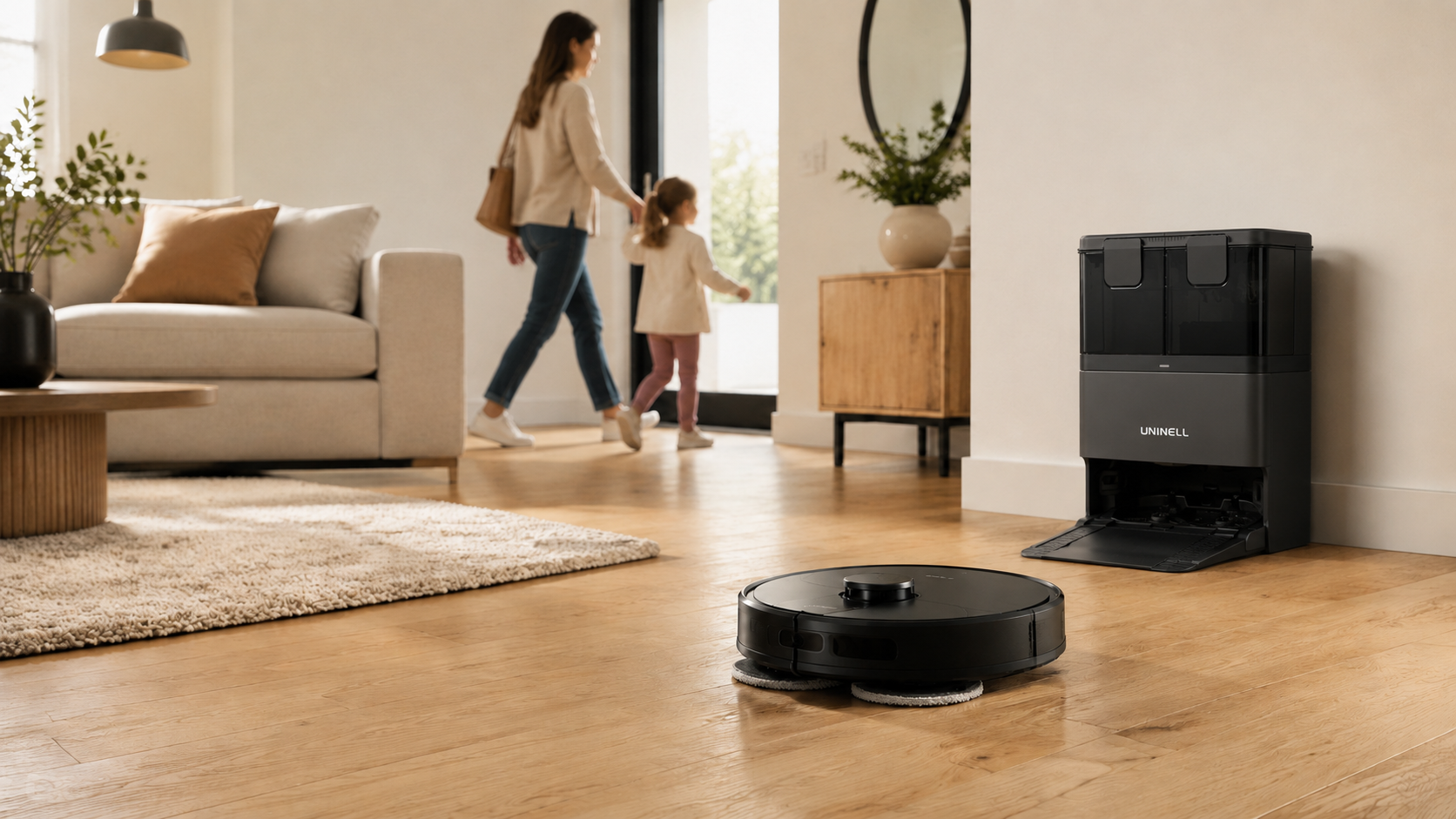
Start With the Cleaning Tasks You Want to Stop Doing
Before comparing specifications, think about the chores you would be happiest to remove from your week.
Is it vacuuming crumbs after dinner? Emptying a dustbin every few days? Washing a damp, dirty mop pad? Or trying to reach the hair and dust that gathers along walls and under furniture?
The best robot vacuum and mop is not simply the one with the longest feature list. It is the one that takes over the parts of floor cleaning you do most often.
For busy households, that usually means looking beyond basic vacuuming.
A Self-Emptying Station Reduces Daily Maintenance
A self-emptying robot vacuum returns to its station after cleaning and transfers collected dust into a larger container or dust bag.
This matters because a standard onboard dustbin can fill quickly, especially in homes with children, pets, or high-traffic entryways. When the bin needs constant emptying, the cleaning routine is no longer truly hands-free.
Why a Larger Station Makes a Difference
A larger dust collection system means the robot can keep running on schedule without asking for attention after every few sessions.
It is especially helpful when you want the robot to clean frequently—such as a quick run after breakfast, before guests arrive, or while everyone is out of the house.
Less bin-emptying means a routine that is easier to keep.
Look for Mop Pads That Clean Themselves
Mopping is where many entry-level robot vacuums become less convenient. They may glide across the floor with a damp pad, but that pad can become dirty quickly.
If it is not cleaned properly, it may simply move residue from one area to another. It can also stay damp after cleaning, creating the kind of maintenance people hoped to avoid.
Why Hot-Water Mop Washing Matters
A station that washes mop pads with hot water helps remove everyday residue, such as kitchen splashes, light footprints, and dried-on marks.
This does not replace a deep clean for every spill. But for regular maintenance, it helps the robot begin each cleaning session with fresher pads.
When comparing models, look for clear information about how the station washes the pads—not just whether it has a “self-cleaning” function.
Drying Helps Keep Mop Pads Fresh
After washing, mop pads should also be dried. Warm-air drying helps prevent pads from staying damp for long periods between cleaning sessions.
That means less manual rinsing, less waiting for pads to dry, and fewer unpleasant odors from a mop that has been left wet.
For households that use mopping several times a week, this is a feature that can make a real difference.
Dual Rotating Mop Pads Provide Better Everyday Coverage
Not all mopping systems work in the same way.
Dual rotating mop pads are designed to scrub as they move, rather than simply dragging a flat cloth behind the robot. This makes them a practical option for regular floor maintenance on sealed hard floors, tile, laminate, and similar surfaces.
They are particularly useful in the rooms that need frequent attention:
- Kitchen floors after meals
- Dining areas with crumbs and small spills
- Entryways with dust and tracked-in dirt
- Living spaces with everyday foot traffic
A robot mop is not meant to eliminate every deep-cleaning task. Its real value is helping prevent small messes from building up.
Do Not Overlook Edges and Corners
Floors can look clean from the center of the room while dust quietly collects along baseboards, around chair legs, and in corners.
This is one of the most common limitations of round robot vacuums and mops. Their shape can leave a narrow strip of floor untouched near walls.
Extendable Mop Pads Improve Edge Cleaning
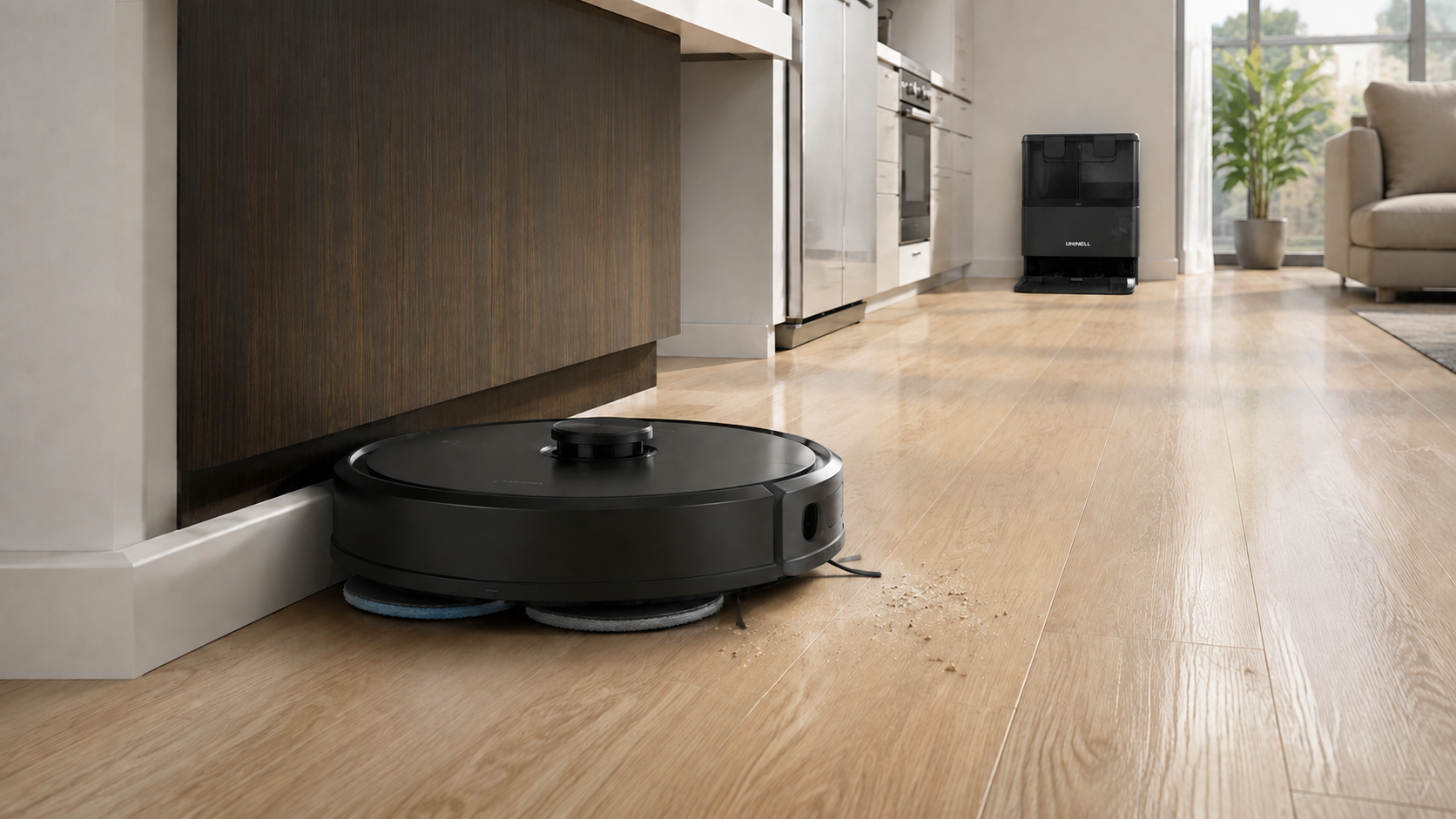
An extendable mop pad can move outward to clean closer to walls and furniture edges.
This is especially helpful in kitchens, dining rooms, and bathrooms, where dirt often gathers around cabinets and along the perimeter of the room.
Extendable Side Brushes Reach More Debris
The same principle applies to side brushes. A brush that can extend farther outward can sweep crumbs and dust from tighter edges toward the vacuum path.
For anyone who is tired of following a robot vacuum with a handheld brush or cloth, edge-cleaning features are worth prioritizing.
Choose Automation That Fits Your Real Routine
The most useful robot vacuum and mop is one that works quietly in the background of daily life.
You should be able to set a schedule, let it handle regular cleaning, and return to floors that feel maintained—not another task waiting for you.
For a busy household, the ideal combination is simple:
- Automatic dust emptying
- Self-washing and drying mop pads
- Consistent mopping performance
- Better edge coverage
- Minimal day-to-day maintenance
Coming Soon: A More Hands-Free Way to Clean
We are preparing to introduce the Z10 Robot Vacuum and Mop, designed for households that want less hands-on floor care.
Its upcoming features include automatic hot-water mop washing and drying, self-emptying dust collection, dual rotating mop pads, and extendable mop pads and side brushes for closer edge cleaning.
Stay tuned for the Z10—built to help make everyday cleaning feel more automatic.