

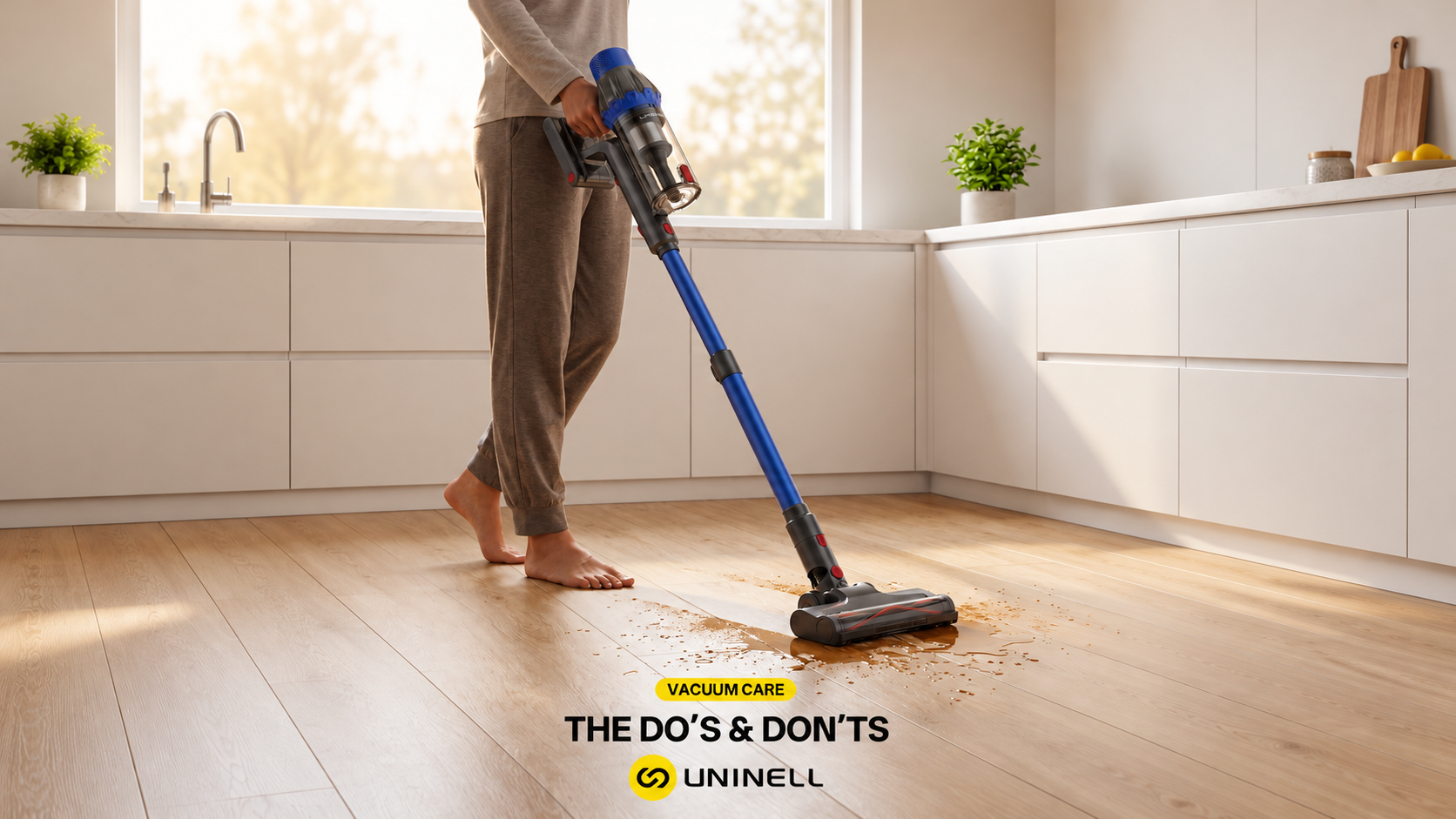
A vacuum cleaner makes everyday cleanup faster—but it is not designed for every kind of mess.
Pet hair on the rug, crumbs under the table, and dust along the baseboards are all familiar jobs. But using a vacuum on liquids, large sharp debris, or certain fine particles can affect performance and may even damage the machine.
Knowing what your vacuum can handle helps you clean more efficiently and keep it working well for longer.
Mistake 1: Thinking Every Floor Mess Can Go Into the Vacuum
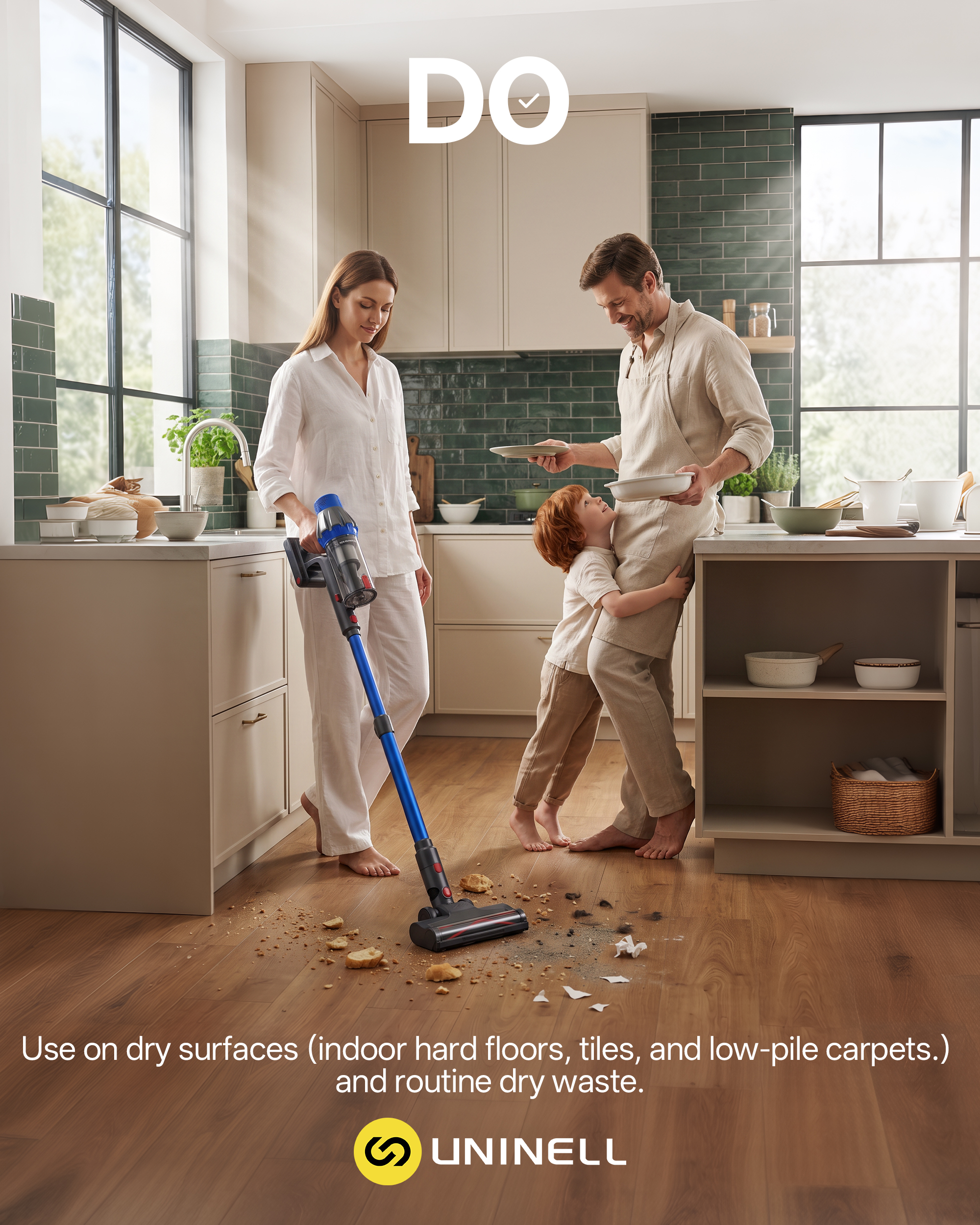
A standard household vacuum is designed for dry debris. That usually includes everyday messes such as:
-
Pet hair
-
Bread crumbs and dry food crumbs
-
Dust and dirt
-
Small paper scraps
-
Dry cat litter around the litter box
-
Hair and light debris on rugs or hard floors
These are the types of messes a vacuum is made to pick up.
However, even dry debris should be handled with a little care. If there is a large amount of litter, cereal, or other particles in one area, pick up the bigger pieces first. This helps prevent blockages and keeps the airflow clear.
Mistake 2: Vacuuming a Wet Floor With a Dry Vacuum
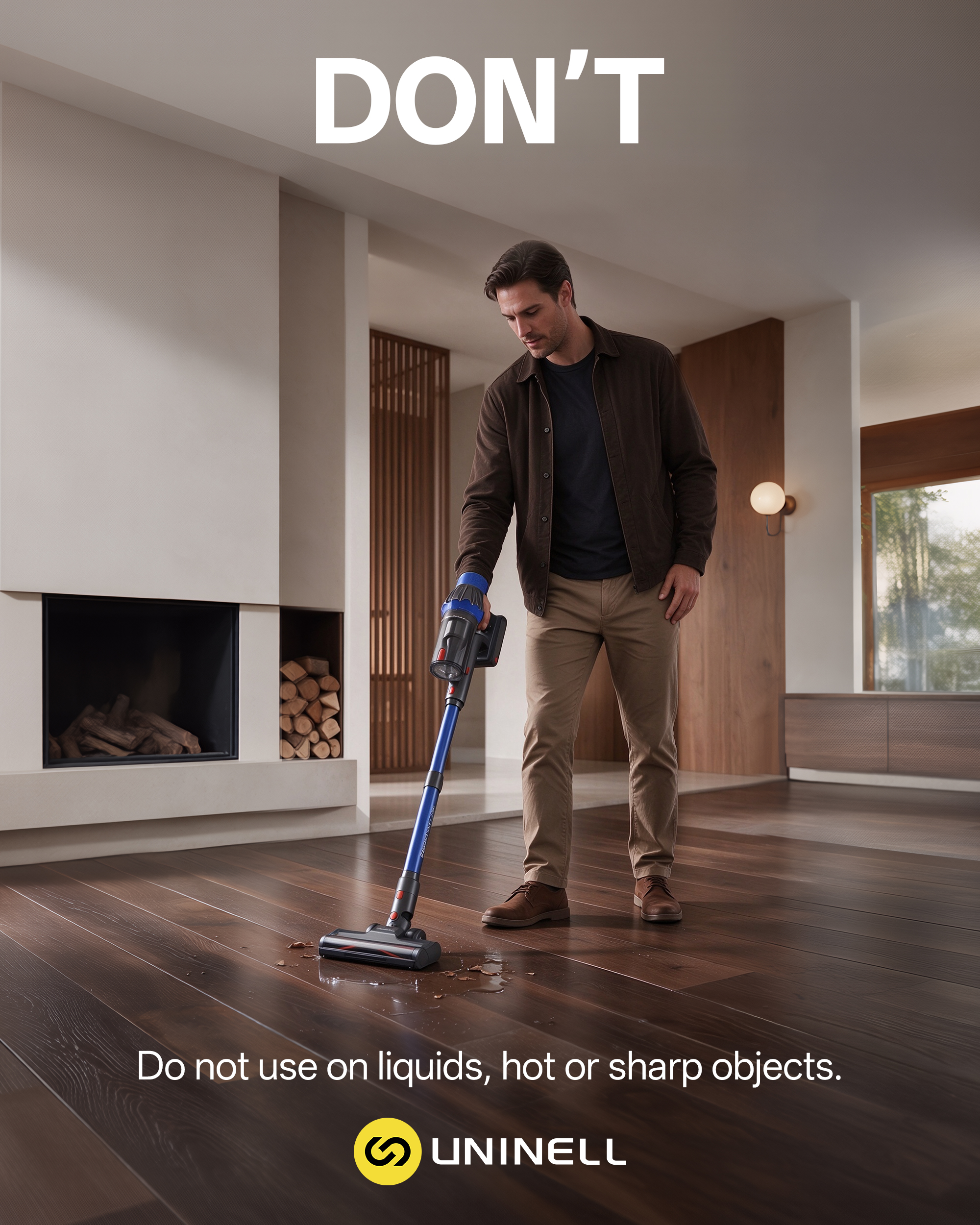
One of the most important rules is simple: do not vacuum water or other liquids with a regular dry vacuum, unless the product manual clearly states that it is designed for wet-and-dry use.
Water can enter parts of the vacuum that are not intended to get wet. This may affect the motor, electrical components, filters, or dustbin system.
The same rule applies to damp surfaces. If the floor is wet from a spilled drink, rainwater near the entryway, or a freshly mopped area, dry it first before vacuuming.
What to Do Instead
For a small liquid spill:
-
Wipe it up with a cloth, paper towel, or mop.
-
Let the floor dry completely.
-
Use the vacuum afterward to remove any remaining dry crumbs, hair, or dust.
If you use a vacuum-and-mop device, always follow the product’s instructions for water use and floor compatibility.
Mistake 3: Vacuuming Sticky Food or Wet Debris
A vacuum is great for dry crumbs after breakfast or dinner. But wet cereal, sauce, sticky food, mud, or damp pet food can cling to the brush roll and inside the dustbin.
Over time, this can cause unpleasant odors and make the vacuum harder to clean.
For sticky or wet messes, remove the material with a paper towel or cloth first. Once the area is dry, vacuum any remaining dry particles.
A good rule to remember: wipe wet messes, then vacuum the dry residue.
Mistake 4: Picking Up Large or Sharp Objects
Small paper pieces are usually fine. However, larger or sharp objects should not be vacuumed up.
Examples include:
-
Glass shards
-
Screws, coins, or small metal pieces
-
Hard toy parts
-
Large pieces of food
-
Long strings, ribbons, or cords
-
Packaging film and plastic wrappers
Sharp objects can damage internal components, while long or flexible items can wrap around the brush roll and block the airflow path.
Before vacuuming, take a quick look at the floor and remove anything that is too large, sharp, or likely to tangle.
Mistake 5: Using the Wrong Cleaning Head for the Surface
Different floor types collect dirt in different ways.
Hard floors often need help picking up fine dust, hair, and crumbs without scattering them. Rugs and carpets may need more focused cleaning to lift embedded debris and pet hair.
If your vacuum includes multiple attachments or cleaning modes, choose the one that best suits the surface. This can improve pickup performance and reduce the need to pass over the same area repeatedly.
For a deeper comparison of cleaning tools and features, visit our Cordless Vacuum Buying Guide.
Mistake 6: Ignoring a Full Dustbin or Dirty Filter
When suction starts to feel weaker, the problem is not always the vacuum itself.
A full dustbin, blocked filter, or tangled brush roll can reduce airflow and make cleaning less effective. Empty the dustbin regularly, especially after cleaning high-debris areas such as entryways, pet zones, or carpets.
Check the filter according to the care instructions for your model. If the filter is washable, allow it to dry completely before putting it back into the vacuum.
Never reinstall a damp filter. Moisture inside the vacuum can affect performance and create odors.
Mistake 7: Letting Hair Build Up Around the Brush Roll
Hair is one of the most common causes of brush-roll maintenance.
Even if a vacuum is designed to reduce tangles, it is still a good idea to check the roller periodically—especially in homes with long hair or pets. Remove visible hair, threads, and fibers before they become tightly wrapped.
A clean brush roll helps the vacuum maintain contact with the floor and continue picking up debris effectively.
A Smarter Way to Handle Everyday Messes
The best vacuuming routine is not about using your vacuum on everything. It is about using it for the jobs it does best: dry dust, hair, crumbs, and everyday floor debris.
For liquids, sticky spills, sharp objects, and large debris, take a moment to clean them another way first. This small habit can help protect your vacuum and keep your home cleaner with less effort.
Looking for a practical cordless vacuum for everyday dry messes? Explore the UNINELL Cordless Vacuum Collection to find the right option for your home.